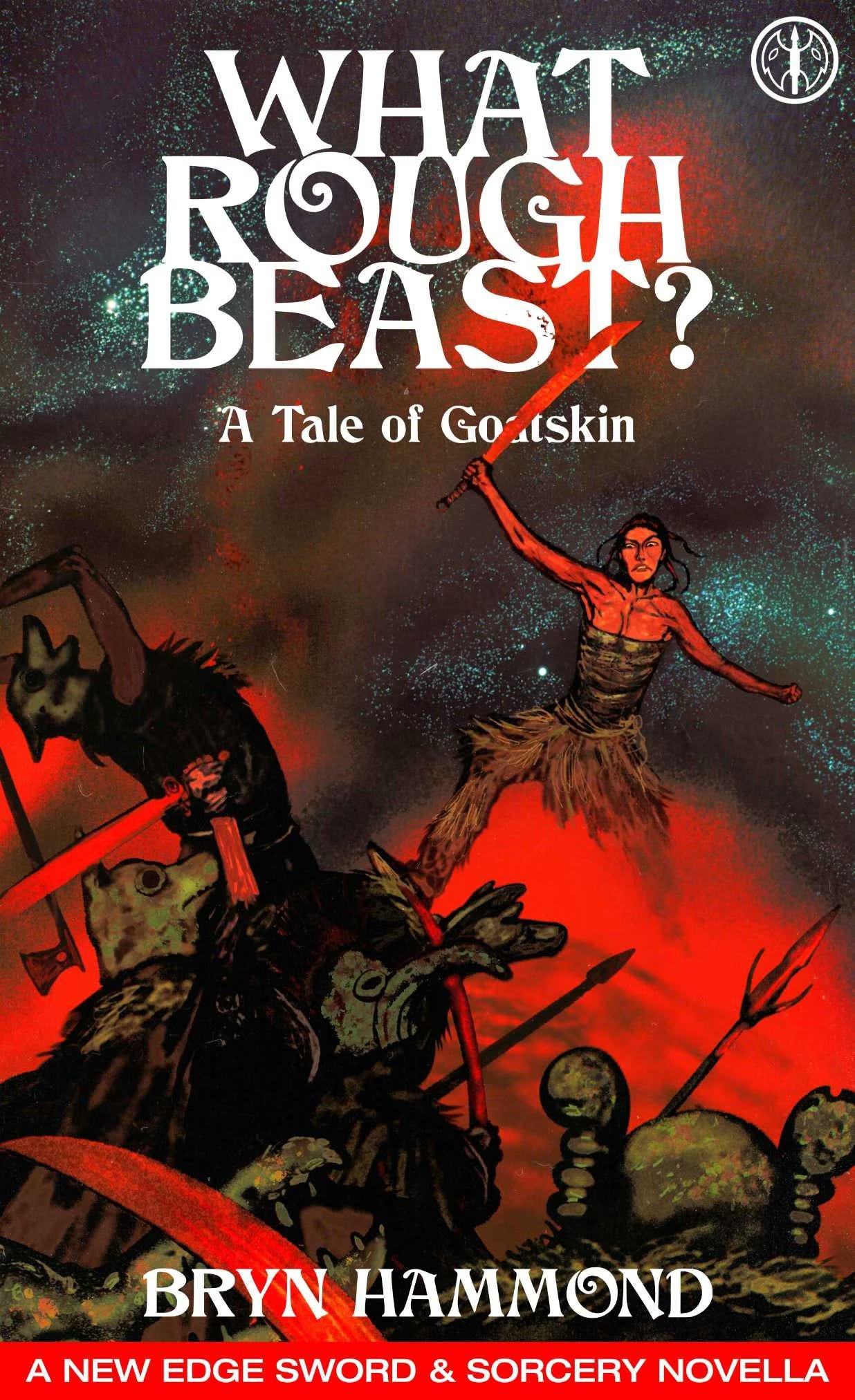
What Rough Beast? by Bryn Hammond is the first release of the Brackenbury Books New Edge Sword and Sorcery novellas which funded on BackerKit last year. It’s also Hammond’s second novella-length tale of Goatskin Duzmut, an adventuring goat-herder roving between the Qilan Mountains and Qaidam Marshes in Tangut (present-day Northwestern China).
This tale is unlike any S&S I’ve read, thus far.
I don’t claim to be an expert on the genre, but I have made my way much of the essential classics and dived into different flavors of modern writers. What Rough Beast? certainly bears the obligatory hallmarks of S&S that I (and many others) have come to love and expect, yet Hammond’s authorial voice is entirely unique. I cannot place the author’s inspirations.
Nor can I define Hammond’s prose. It’s terse, vivid, and wild. Heavy on physical verbs and unconventional adjectives; rich with sensory imagery, which gives it an artistic, literary quality.
Winter’s inner layer of hide, clammy and pongy, she tossed—vultures had stomach for worse—and vigorously scraped grot out of her skin with fragrant summer grass.
(Opening line, Hammond 1)
Rather than painting a picture on a canvas, this story paints the reader’s body with dyes derived from both pungent and aromatic substances. It throws you in the shit, just as it throws you in the ambrosia.
Hammond’s prose won me over quickly, but I did sometimes find it difficult to comprehend, especially within the first couple of chapters. There’s an adjustment period while you’re getting to know Duz. Readers who have read the first Goatskin novella, Waste Flowers, will likely not feel this way (I certainly want to turn back and experience it, after reading What Rough Beast?).
Once you’ve grown accustomed to the writing, it flows and flows.
Plot and Themes
Avoiding spoilers, this tales follows Duz while she’s on the way elsewhere. She is waylaid by strange were-beasts that accost her throughout most of the tale, sets off to discover the fate a lost shaman, and goes on to some larger business from there.
From a plot standpoint, my only gripe is that the finale did not fully utilize elements set up and explored heavily through the beginning and middle sections. The ending sequence read more like a continuation of a previous tale (presumably Waste Flowers; I’ll find out soon).
Beyond that, this story is gripping and grounded in history. Hammond’s roots as a writer of Historical Fiction is on full display and very welcome to my personal taste for Fantasy. While some might argue in-depth descriptions of historical doings* hurts the pacing in a Sword and Sorcery tale, Hammond maintained a delicate balance throughout and kept the pages flowing.
*(The antiquated ways through which people lived their lives, unfamiliar to the modern reader; an obligatory include in Historical Fiction. My own term.)
I am a notoriously slow reader, and as a cynical editor, prone to losing interest. I finished the book in about two nights of focused reading. That’s always a huge mark up, in my book. I was locked in.
What Rough Beast? seems to ask the reader to consider a couple of questions:
- What is evil? And is it what has been prescribed by society?
- What beasts do we wrangle with? Inside and out.
Examining Evil – Nothing is Unclean
What Rough Beast? challenges the reader to consider evil and how its enacted and presented in people, both good and bad. Clean and unclean. Sacred and unholy.
Pollution. It was his weakness. His weakness, to be disgusted by her goat’s head, to be afraid of shards and fragments, to think them filthy, to believe that they polluted him.
Nothing is unclean.
The sentence popped into Duz’s head, from her time among the Mongols: an edict of Tchingis Khan’s, the simplest three words that had solved a lot of inability to live together.
(Hammond 113)
This, I feel, is the primary thesis of the whole tale. The historical law reads, “16. He forbade them to say of anything that it was unclean, and insisted that all things were clean and made no distinction between the clean and unclean” (Salem Press).
The story is muddy and bloody, but also intimate and kind. Duz saves a girl from arrest by cutting down three aggressive settlers. A bandit leader slaughters young noble women on a parapet to send a message, so her followers need not dirty their own hands. Duz fights off the attacking were-beasts, yet attempts to spare their lives, because life is not to be wasted.
This goes beyond moral relativism. The actions depicted throughout this story highlight the paradox between clean and unclean—we all have some grime and muck clinging to our coats, our boots, our souls. Just as we’re all capable of evil, we’re all also capable of good.
Duz’s interactions with supporting characters highlight different perspectives on this thesis. Aigana exhibits both divergent behaviors and traditional values, while also showing how these things are more intertwined than typical classifications might lead one to believe.
Let’s return to the question of the beasts we hold inside us; how do these beasts inform our actions? Do we act to feed the beast or to deny it? Why?
What Rough Beast? does not offer answers to these questions, though it challenges the reader to weigh possible solutions on their own. This is what good fiction should do—encourage the reader to think critically and to ponder an issue, even if they don’t agree. Especially if they don’t agree.
Setting and Time Period
Frankly, I love the setting. I’m always excited by Fantasy stories adapting non-European settings. I’m also a huge fan of authors who know their history. Hammond is clearly an expert on the culture of Tangut and this time period.
On another level, the setting is under-examined and not part of the traditional collective medievalism* of the western world, so it reads as strange and whimsical without coming off as overly exotic.
*(An understanding of pop culture, historical texts, and history that shape one’s image of the medieval period. Not my term, but a field I find very interesting!)
I had some trouble determining the intended level of modernity, or what century in which the book takes place. Sometimes dialogue broke continuity, using a slightly modern phrasing.
The machinery present placed me in a transitional pre-industrial era, but the rural life seemed earlier. Perhaps that was point, there’s certainly a thought-out juxtaposition there. This could just be my unfamiliarity with the time period and culture covered.
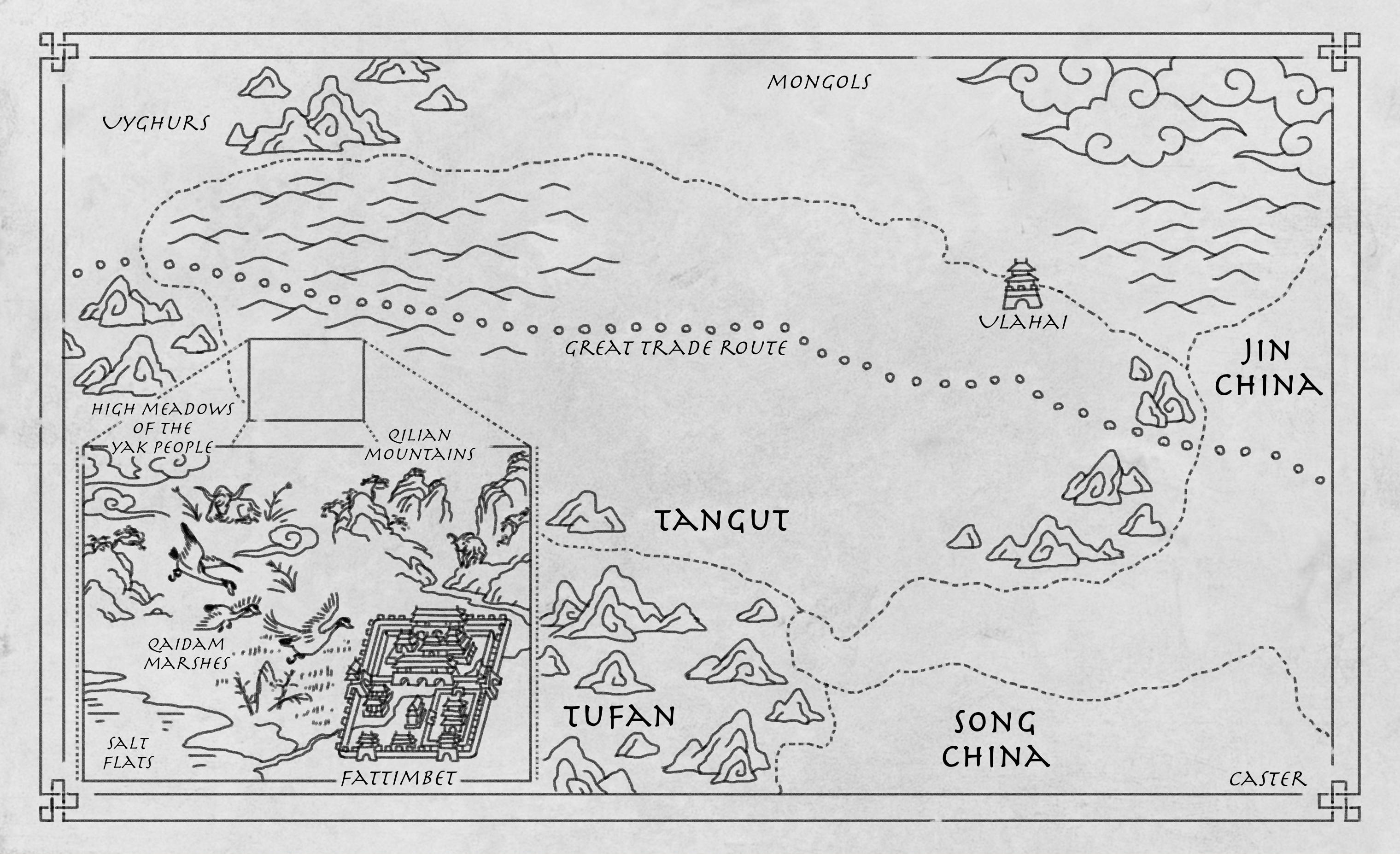
There’s fantastic use of nature writing in moments of pause and description, which gives the land character and nuance, making the regions standout. The map is genuinely helpful, both in reading and as I write this review.
In Sum: Should You Read What Rough Beast?
What Rough Beast? is a strikingly unique contribution to the Sword and Sorcery lexicon, standing entirely on its own. The authorial voice is powerful, the characters are thought-provoking, the world is tangible and full of life, the plot is bloody exciting.
There is a good deal of downtime and reflection; you will not find high-octane adventure with clear answers. The elaborate and elegant prose is both a selling point and friction, sometimes swelling to become a bit obtuse.
While I am loath giving numerical ratings to literature of any kind, I can whole-heartedly recommend this book to anyone intrigued after reading my thoughts. I am looking forward to my next run-in with Goatskin Duzmut.
What Rough Beast? is available for preorder at Brackenbury Books and ships June 15th, 2026.
Leave a Reply